Thursday, August 3, 2017

Clean Water for Rogbere!

We can now report that a clean water well has been completed in Rogbere! Not only will this well provide many in the community with clean water, but it will provide much needed irrigation for their fields during the dry season.

New clean water well in Rogbere, Sierra Leone

For the past several years, Trinity Bible Church has been participating in a village partnership with Rogbere (roog-berry), Sierra Leone. This partnership is being facilitated by World Hope International (WHI), the relief and development affiliate of The Wesleyan Church. We have participated by praying for the village, traveling to Rogbere in March 2016 to build relationships with the villagers, and giving to our 3:20 Fund, which supports this kingdom-building project.

Despite the difficulties of the Ebola epidemic in 2015, there has been much progress in this partnership. Through the work of WHI, the village has come together to complete the laborious task of planting 6.5 acres of pineapple, and they have experienced the joy of their first harvest. The profit from this harvest will allow them to better support their families and to pay school fees for their children. And now, the second phase of the project has been completed--a clean water well that will enable the village to be healthier and their harvests to be even more productive.

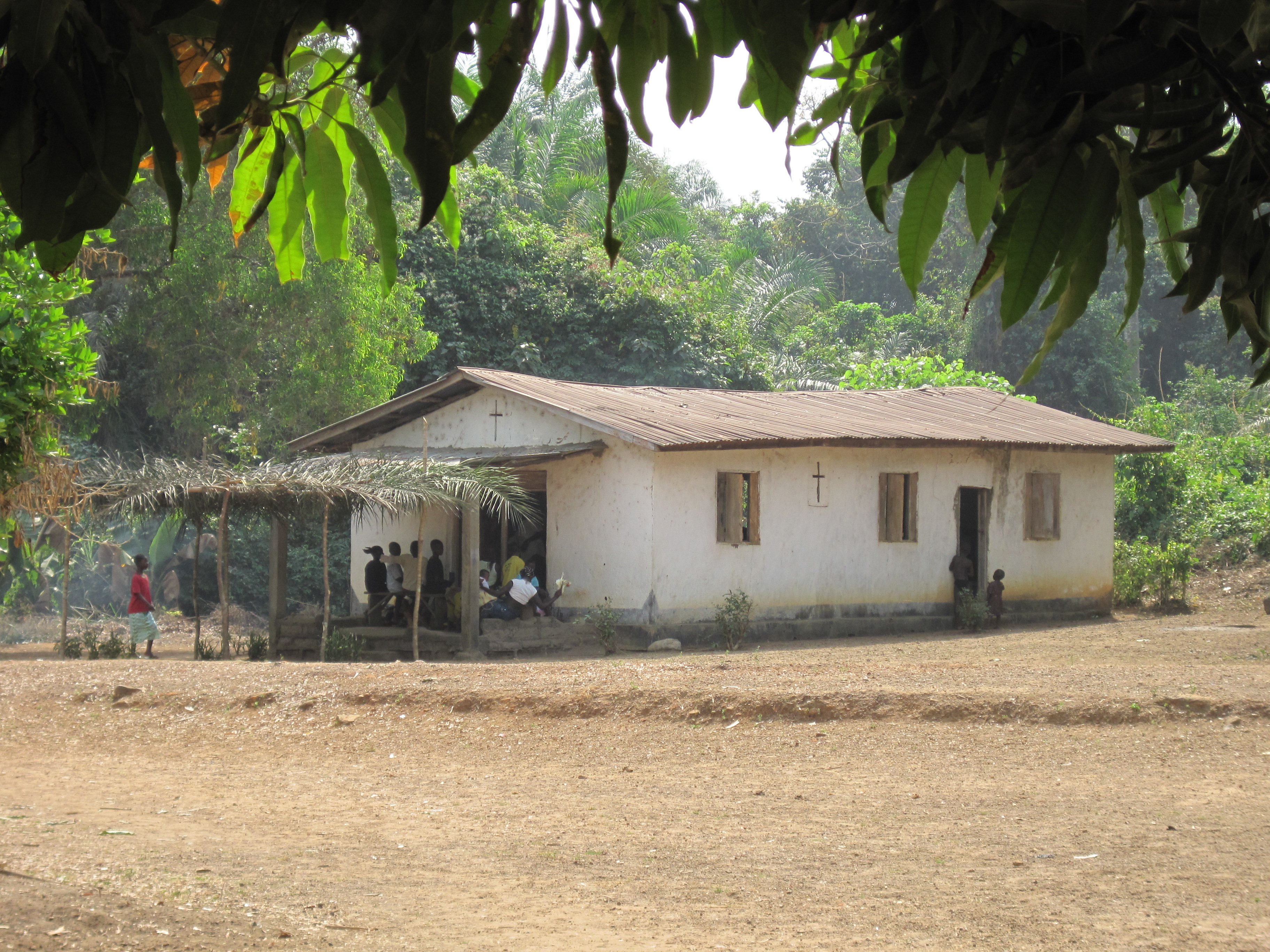
For the last phase of this project, the village leaders have asked us to help them build a church, because it takes hours to walk to the nearest one. Let’s celebrate how God is using our resources to make an earthly and eternal impact in Rogbere!

Google Maps view of Rogbere

Thursday, March 16, 2017

200 Mosquito Nets for Rogbere

In recent months, 200 insecticide-treated nets were distributed for pregnant women, lactating mothers, and elderly people in Rogbere. The nets will kill and repel mosquitoes carrying malaria, one of the leading causes of death in Africa.

Rogbere villagers receiving PermaNet mosquito nets.

Abdulai, one of the VDC members stated, “Considering the high cases of malaria reported in the community this year, I hope the mosquito nets will greatly help mitigate malaria cases in the community.” The community is very thankful to receive the mosquito nets.

Mr. Aruna Koroma, the agricultural specialist, encouraged the recipients to use the nets for proper use, not for fishing or other means.

Aruna providing education on mosquito nets.
Let's continue to pray for the people of Rogbere, both for the physical health and their spiritual health.

Thursday, August 4, 2016

New Drying Floor and Seed Loans

Drying Floor Construction 
It is common for villages to go with very little food for two months each year. These are known as “the hungry months.” This happens when a family’s stock of staple dried food runs out or spoils. The main staple foods are rice and peanuts, and drying is one of the few ways that the people have to preserve food between harvests. 

World Hope International has found that the construction of concrete drying floors in a village significantly reduces post-harvest losses of such staple crops. Rice, peanuts, peppers and other crops are spread on the floors which are positioned to get maximum sun. The moisture is reduced so that the crops do not mold while being stored. 
 
The new drying floor in Rogbere.
Without the drying floors, people spread crops on large rocks, but these are not in the village where they can be watched. Sometimes other people come and steal rice being dried out of sight. In addition, the rocks are not large and flat enough to accommodate all the crops that need drying. 

The concrete drying floors are slanted for water runoff and provide an efficient and safe way to dry crops, which is the primary method of food preservation in rural Sierra Leone. One drying floor was completed in June, bringing long term benefit to the community. The community is grateful for the drying floor that was constructed in Rogbere. 

Distribution of Peanut and Rice Seeds 
Forty (40) women each received two bushels or bags of peanut seed and 30 men each received two bushels of rice seed on loan. Peanut seeds were exclusively given to women and rice to men as growing rice requires more physical work. All beneficiaries already have either rice or peanut farms and will use the new seeds to enlarge their farms. The first harvest is expected in September for peanuts and December for rice. Farmers will pay back to the community seed bank and the next selected farmers will receive the seed loan. 

A Drilled Well 
The preparation for a drilled well is underway, and the community is very excited to have access to clean drinking water. 

A woman carrying her peanut seeds.


Monday, March 21, 2016

Rogbere Day Camp

On Friday we met the people of Rogbere, and on Saturday we hosted a day camp for around 250-300 kids from the area. This day camp was very significant for them because this area was hit very hard by Ebola. Out of the 60 members of the pineapple farm cooperative, 9 of them died of Ebola. So for this village, this day camp was a joyous celebration coming at the end of a long period of sorrow. 

Baby Rattles
Handing out tote bags
During our day camp on Saturday, we brought many gifts for the children: homemade party hats, bracelets, maracas,  and over 150 tote bags with school supplies in them. These tote bags were given to the school-aged children, and were sewn by Trinity Bible Church’s Piecemakers sewing group. Every child received a gift and every child had enough to eat!
 

Cady Schmidt shared a Gospel message with the children, and they were able to easily understand and recount the plan of salvation. Some of the children in the village are already Christians, and so for the others, we are praying that many seeds were planted.


Giving school supplies to the 4 Elementary Schools near Rogbere.
Sampling Rogbere Pineapple. Delicious!


Monday, March 14, 2016

Update - March 14

Update from Peter - We had a great couple days Friday and Saturday in the village and I preached this morning!

We arrived at the meeting spot and they gave us a joyous welcome with music and dancing! We presented them with some gifts: oil and rice, and also UNI hats and a photo album from Iowa for the village chiefs, and knives, soap and washcloths for the 10 women on the Village Development Committee (VDC).

We were able to greet the villagers and we shared our love for them--and explained that we love them because Jesus loves us. Our efforts in the village are the overflow of the love that we have received from God.

The Chairwoman of the Village Development Committee was a Christian, and she greeted us and shared with us how thankful they were and how they have seen and observed that Christians are the ones that will "drop a rope down and help pull you out of the pit." She also said that she was praying for us that the money we had used to help them would be multiplied back to us a hundredfold.


She made requests from the village as we continue the partnership. They requested a well, hygienic bathrooms, and a church. The well is needed especially because their pineapple fields are drying out. It has been an especially dry "dry season," and although they will have a harvest, it will be better if they can irrigate the pineapples when necessary. The church is needed because the only church near them is very far away. So at this point, both the National Superintendent of the Wesleyan Church and the village itself have expressed interest in a church in Rogbere.

Thursday, March 10, 2016

Update - March 10

Today was very good! We did a tour of some of the Wesleyan ministries near Makeni. We visited a Wesleyan School and the Kamakwie hospital. But probably the most powerful thing today was seeing the Wesleyan missionary graveyard. This is where some of the first missionaries in Sierra Leone were buried. Many of them came to Sierra Leone not expecting to return home. They would pack their belongings in their coffins. But they paved the way for many churches to be planted and for many works of compassion.

Something that might be interesting - take one of the missionary names from the stone and do a google search. Include the year to narrow the search. Some of the histories are quite fascinating!


It is great to have so many praying. Tomorrow we visit the village. Please pray for open doors to share the Gospel, and pray that we will be able to show the Jesus Film.

Wednesday, March 9, 2016

Update - March 9 - at World Hope Offices

Another VERY cool thing from our meeting with the national superintendent here-he is VERY passionate about the Wesleyan church. His conversion story is extremely powerful. He said he is going to meet with some of his team in the coming days and hopes to plant a church in Rogbere! He said they need to have more of a presence in that part of the country and he was very supportive and passionate about wanting to make that happen. His name is Reverend Usman Fornah. He has an incredible faith story and was personally influenced by Carrie Jo's dad, Don Kinney-a very powerful picture of disciples making disciples.

We made it back to the Cains' compound for the night. We got to see the welcoming ceremony at the village for our teammates from Michigan. We toured their village, saw their pineapple farm and their completed, working well. We also visited a well drilling that is currently in progress.

The most sobering part for me personally was the Ebola Survivors clinic. World Hope has several peopl e on staff there who help with all different aspects of the Ebola recovery process. 


This is a photo of one of WHI's partnership with GE-a clinic in a can. They have four shipping containers that were sent here at the height of the crisis. Inside is a fully functioning, sophisticated exam room, typical to what a dr office looks like in the US. It is run on solar power. During the crisis it was used as an exam room for patients, now it is used for survivor clinical testing and, most importantly, recovery counseling.


Along with professional counsellors, they have two male survivors who serve as advocates/encourages for other survivors. One of them lost his wife, two children and 11 other family members to Ebola. The other lost his brother, other family members, along with 38 people from his village. There is so many unknowns with Ebola, even now in the recovery stage. Many Ebola survivors are discriminated against and turned away from traditional medical centers because of their survivor status. This place is CRUCIAL, not only for their health, but also for their mental recovery and spiritual healing.


Thursday, January 28, 2016

Team Rogbere: March 7-14

We are sending a short-term missions team to Rogbere, Sierra Leone from March 7-14. We will be traveling to Sierra Leone with Phil Smart, from World Hope International, who will act as our guide. While we are in Rogbere, our goal is to build relationships with the people of the village, assess the progress of the development projects so far, and find out what the partnership will look like in the future. Please pray for our team as we work through the logistics of going on this trip and as we ask God to prepare our hearts for the trip!


Monday, October 26, 2015

Team Rogbere: March 2016

In a few short months, we will be sending our first small team to the village of Rogbere. We almost have the team members finalized, and we are keeping the team small because it will be our first contact with the people of Rogbere, and so we aren’t sure what exactly we are going to encounter. This trip will also be different than many short-term mission trips. We won’t be doing construction or medical missions or street evangelism. We aren’t going to an established church or mission work, because as far as we know, there is no church in Rogbere.

So what will we be doing?
           
We will meet the people.
We will introduce ourselves.
            We will listen to their stories.
            We will try to learn from them about their culture.
            We will see the pineapple farms that we have helped them plant.
            We will assess the resources of the village.
            We will assess the needs of the village.
            We will take pictures.
            We will share about Jesus at every opportunity.

We want to make the most of this opportunity to share Jesus. Colossians 4:5-6 says:

5 Be wise in the way you act toward outsiders; make the most of every opportunity. 6 Let your conversation be always full of grace, seasoned with salt, so that you may know how to answer everyone. (NIV)


Please pray that during our time in Rogbere this March, our words will be “full of grace” and “seasoned with salt”.

Thursday, August 27, 2015

Pineapple Update

Rogbere is one of 10 villages that is receiving outside assistance to establish its pineapple crop. See in this video how villagers from these communities are working to plant these pineapples. They are optimistic that this new cash crop will help them to be able to pay school fees for their children and to better their living conditions. 


Monday, July 27, 2015

Ebola-Free!

For the last year, the Ebola crisis has plagued Sierra Leone, which has claimed over 11,000 lives in West Africa. This crisis has had very negative economic effects on Sierra Leone and our village of Rogbere has been affected by this crisis as well. Due to strict quarantine regulations necessitated by the Ebola virus, villages like Rogbere have not been able to attend vital agriculture trainings and to farm as they desire.

We also haven’t been able to have very much contact with the village because of the Ebola crisis. From the beginning of this partnership, we have hoped to send short-term mission teams to Rogbere to build relationships with the villagers, assess additional needs that they might have, and to share with them why we are doing what we are doing (Jesus!).

I am now pleased to report that Rogbere’s district in Sierra Leone has gone long enough without a new Ebola case that they are considered Ebola-free. 40 days is considered to be the time when a district is safe, and they are now beyond that. We can praise God for this while continuing to pray for a complete resolution to this crisis.


The current map of Ebola cases in West Africa


Because of the improvement in the Ebola crisis, George Beals, who oversees Village Partnerships at World Hope International, has informed us that they are ready to start sending short term mission teams into Sierra Leone. We are looking forward to being able to go and visit Rogbere sometime early in 2016!

Monday, July 13, 2015

Faith and Rogbere

Breakdown
In the nation as a whole, 63 percent of the population is Muslim and 16 percent are Christian, which puts Christianity significantly in the minority. The same is true of the region that includes Rogbere. Islam is the primary religion in this area, and there are few Christians. Most of the villages in the area do not have any Christians.

Attitude towards Christianity
Although Christians are in the minority, they do not experience hostile treatment from local Muslims; they have coexisted peacefully. Christian activities have not been hampered by any Islamic group or sect in these villages. It has even been expressed that if a woman or child decided to leave Islam for Christianity, then they would be given the opportunity to do so.

Church
There is only one church in the midst of the eleven villages associated with the Community Based Organization. 
A Wesleyan Church in Sierra Leone
The local people have made a strong commitment to cooperate with this church in any evangelistic activities. However, it was suggested that establishing a church at Rogbere would not be helpful at this time as it would be difficult to attain membership in such a rural community. Working to establish other social facilities, such as a school and health center, would likely be more helpful at this time. Rogbere is centrally located, so members of surrounding community would be able to access these facilities as well. 

Prayer
God, as this Village Partnership continues to develop, would you help the efforts to reach residents of Rogbere to be fruitful? We also pray that you would raise up laborers from the Wesleyan Church in Sierra Leone, and from our own church as well as we look to send a short-term team.

Wednesday, May 20, 2015

How does life in Rogbere compare to life in America?

A village school in Sierra Leone.
Schools
For Rogbere, only two of the eleven villages nearby have schools. Of these two, only one educates students up to 6th grade. For some children in this area, it means walking over 5 miles to and from school every day. The nearest Junior High and High School is located in Newton, which is about 20 miles away from Rogbere. Many students grow weary of walking long distances to school and drop out.

For us, there is access to K-12 public education right in our immediate communities. And for children who don’t want to walk to school, we have school buses that pick children up within a couple blocks of their home. Walking miles and miles to school is not an problem for us.

Healthcare
Access to health care is a serious problem as none of the villages near Rogbere have a health center. The nearest one is located in Newton, which, again is 20 miles away. This is representative of Sierra Leone as a whole, which has the worst infant mortality rate in the world andhas a life expectancy of 45.3.

We have very broad access to healthcare here. Yes, we complain that it is expensive, but we take for granted that at least we have the ability to see a doctor or to get medicine or to go to an Emergency Room.

Water
Access to safe drinking water is a serious problem. Rogbere does not have a well that can provide clean water. This upcoming year of our partnership will help provide clean water for Rogbere, along with building sanitary toilets.

Our access to safe water is unlimited. In fact, Cedar Falls was recently awarded for having some of the best tasting water in the state. Not only is our water safe, but it tastes great! Let’s be truly thankful for what we have as we pray for Rogbere.

Wednesday, April 8, 2015

Rogbere: Rising from the Ashes

Rogbere is one example of the many other Sierra Leonean villages demolished during the Civil War (1991-2002). It was burnt down in its entirety and the cattle were taken away. During the war, many of the displaced inhabitants resettled elsewhere, but after the war, some residents began to slowly return. Below is an example of the destruction that one Sierra Leonean village suffered as a result of the Civil War.


After the Civil War, the Bombali District Medical Officer, Dr. Yankuba Bah, purchased fifty-two acres of unused land near Rogbere to begin some agricultural programs. Dr. Bah established a Community Based Organization (CBO) of those residents who did return; it is registered with the relevant government authorities. This allows villages or groups of villages to have their own farmer's cooperative with its own leadership comprising of a leader, secretary, and a treasurer. The goal is to foster unity among the people and to empower them economically through agriculture and micro credit. Each member of the association, makes a monthly deposit of two thousand leones (approximately $0.46).

The 25,000 pineapple suckers that we have donated so far (along with fertilizer and tools) have empowered the Rogbere Village Cooperative to plant 3 acres of pineapples! This is impressive considering impact of the Ebola epidemic and the fact that planting pineapples is backbreaking work. And the economic impact of this investment will be sustainable and ongoing. Each pineapple plant produces 4 pineapple suckers, which can be used in future years or sold as seeds to other villages. As we invest strategically in them, they will in turn be able to provide opportunities to surrounding villages and help their region rebuild.

Tuesday, March 10, 2015

Social Norms in Rogbere

Here are some common societal norms in Rogbere. These things help give us an idea of what the culture is like and how we should pray.


GENDER ROLES AND MARRIAGE

The husband acts as the head of the family by working hard to take care of them and meet their basic needs. Women see themselves as true helpmates to their husbands, especially in monogamous homes.
Interestingly, women do sometimes hold leadership positions in their villages. In fact, they are sometimes elected as village heads. Although, in the home, wives submit to their husbands, they act as powerful voices and decision-makers in their communities.

Polygamy is commonly practiced in the area. Many men view polygamy as a way of alleviating women’s domestic and farm burden, although women view it as a senseless invitation of trouble into their homes. Although women have made it clear to men that polygamy does not work well in the home, it is still practiced with little or no sensitivity to the women’s sentiments. The church teaches monogamy.

DOMESTIC VIOLENCE

Despite general awareness about Gender Justice Laws passed in 2007, domestic violence based on gender remains a prevalent issue. Instances usually occur at night and are not mediated by anyone. Society believes that both parties have the responsibility to resolve their conflicts in the home. According to data collected by the government, 63 percent of women questioned in 2008 said it was "acceptable for a husband to beat his wife under certain circumstances."

TEENAGE PREGNANCY

Another common issue is teenage pregnancy and early marriages. Girls who become pregnant at a young age often drop out of school (never to finish) and get married to peers or older members in the community who impregnated them. The age gap between husband and wife is often wide.

SECRET SOCIETIES

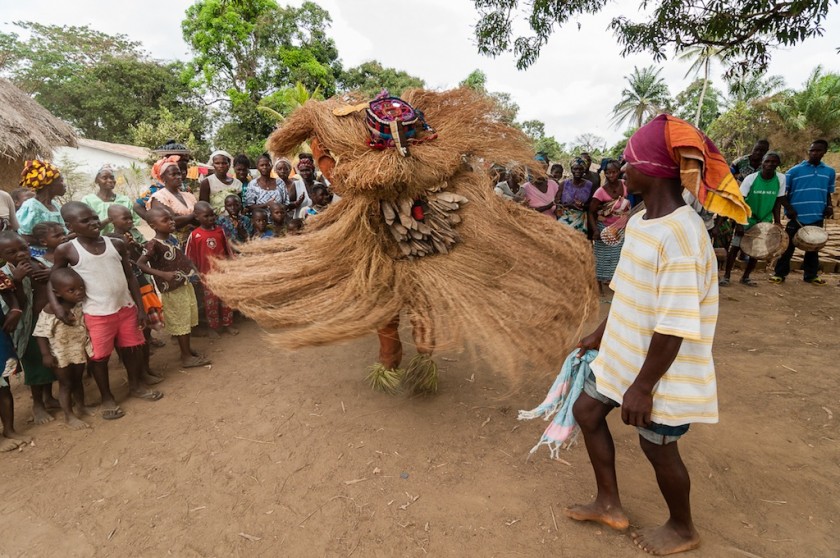
Three types of secret societies are practiced: Bondo, Poro, and Ojeh. Very few people, members and non-members, will discuss these secret societies as discussion may lead to death by members of the group. 

A Poro society ritual.

Friday, February 13, 2015

Pineapples Galore

World Hope International Sierra Leone has been working hard with the people of Rogbere. The original goal was to get 10 acres of pineapples planted in 2014. In Rogbere they are now at 2 acres of pineapple, with 24,427 pineapple suckers planted. They had hoped to be further along with this project but the Ebola virus crisis has meant WHI could not import pineapple suckers from Guinea (where the Ebola crisis started) and some farmers were reluctant to go to the fields and work near other people for fear of contracting the virus.

A Sierra Leonean planting pineapple suckers.
As it is now the dry season, it is too dry to plant any more. They hope to begin planting pineapples again in May. In the meantime, the plan is to care for the current acreage by working with the people of the village to weed, water, and start applying calcium carbonate, which will stimulate the pineapples to start fruiting. This should make them ready to harvest in the summer. Beyond selling the fruit in the open markets, WHI is coordinating the harvest with Africa Felix Juice near Freetown to buy some of the fruit for juicing.   

World Hope is also going to begin to look at supplementing some of the village farms with other fruits that are less labor intensive and are ready to harvest sooner than pineapple. They are going to focus on developing their nursery farm for guava and papaya to supplement these farms as soon as the plants are ready to be planted from the nursery.  This will help these villages diversify their crops as well, which will be very valuable long-term.

Tuesday, February 3, 2015

Ebola

Sierra Leone is facing significant challenges as a country. In addition to being one of the poorest countries in the world, they are also facing the worst Ebola outbreak in the history of West Africa. All of Sierra Leone has been affected, and even our small village of Rogbere.
Medical professionals in Sierra Leone attending to a quarantined man.
Earlier this year the village had a death due to Ebola because because a village resident had traveled to another village for a funeral. And more than that, the economic repercussions of Ebola are far-reaching and devastating. The average income in Sierra Leone, already among the lowest in the world, will be cut in half because of the crippling economic implications of Ebola. So what is  World Hope International, the organization we are working with for this village partnership, doing to help? This video explains some of what they are doing to fight Ebola.


Friday, December 19, 2014

Map of Rogbere

Here is the google maps view of Rogbere's approximate location.


Rogbere is located in the Western Area Rural District, of Sierra Leone, and is nine miles from the district headquarters and three miles off the Waterloo-Masaika Highway. Rogbere is a strategically located farm settlement, surrounded by ten villages in a three mile radius including: Faibaina, Magbagban, Masorie, Mafullah, Magbrofay, Maswaray, Makarifor, Gbonkor-Yalleh, Masifu, and Foya (the last appears on some maps.) Together with the surrounding villages, this village is blessed with an extensive piece of fertile, inland valley swamp. This swamp, which covers over 1,000 acres, is underutilized mainly due to the lack of needed farm tools and equipment such as tractors.

Formerly occupied by a Temne-speaking people and Fullahs, who raise cattle, Rogbere village is one example of the many others demolished during the Civil War (1991-2002). The village was burnt down in its entirety and the cattle were taken away. After the war, the displaced inhabitants resettled elsewhere.