Wednesday, April 8, 2015

Rogbere: Rising from the Ashes

Rogbere is one example of the many other Sierra Leonean villages demolished during the Civil War (1991-2002). It was burnt down in its entirety and the cattle were taken away. During the war, many of the displaced inhabitants resettled elsewhere, but after the war, some residents began to slowly return. Below is an example of the destruction that one Sierra Leonean village suffered as a result of the Civil War.


After the Civil War, the Bombali District Medical Officer, Dr. Yankuba Bah, purchased fifty-two acres of unused land near Rogbere to begin some agricultural programs. Dr. Bah established a Community Based Organization (CBO) of those residents who did return; it is registered with the relevant government authorities. This allows villages or groups of villages to have their own farmer's cooperative with its own leadership comprising of a leader, secretary, and a treasurer. The goal is to foster unity among the people and to empower them economically through agriculture and micro credit. Each member of the association, makes a monthly deposit of two thousand leones (approximately $0.46).

The 25,000 pineapple suckers that we have donated so far (along with fertilizer and tools) have empowered the Rogbere Village Cooperative to plant 3 acres of pineapples! This is impressive considering impact of the Ebola epidemic and the fact that planting pineapples is backbreaking work. And the economic impact of this investment will be sustainable and ongoing. Each pineapple plant produces 4 pineapple suckers, which can be used in future years or sold as seeds to other villages. As we invest strategically in them, they will in turn be able to provide opportunities to surrounding villages and help their region rebuild.

Tuesday, March 10, 2015

Social Norms in Rogbere

Here are some common societal norms in Rogbere. These things help give us an idea of what the culture is like and how we should pray.


GENDER ROLES AND MARRIAGE

The husband acts as the head of the family by working hard to take care of them and meet their basic needs. Women see themselves as true helpmates to their husbands, especially in monogamous homes.
Interestingly, women do sometimes hold leadership positions in their villages. In fact, they are sometimes elected as village heads. Although, in the home, wives submit to their husbands, they act as powerful voices and decision-makers in their communities.

Polygamy is commonly practiced in the area. Many men view polygamy as a way of alleviating women’s domestic and farm burden, although women view it as a senseless invitation of trouble into their homes. Although women have made it clear to men that polygamy does not work well in the home, it is still practiced with little or no sensitivity to the women’s sentiments. The church teaches monogamy.

DOMESTIC VIOLENCE

Despite general awareness about Gender Justice Laws passed in 2007, domestic violence based on gender remains a prevalent issue. Instances usually occur at night and are not mediated by anyone. Society believes that both parties have the responsibility to resolve their conflicts in the home. According to data collected by the government, 63 percent of women questioned in 2008 said it was "acceptable for a husband to beat his wife under certain circumstances."

TEENAGE PREGNANCY

Another common issue is teenage pregnancy and early marriages. Girls who become pregnant at a young age often drop out of school (never to finish) and get married to peers or older members in the community who impregnated them. The age gap between husband and wife is often wide.

SECRET SOCIETIES

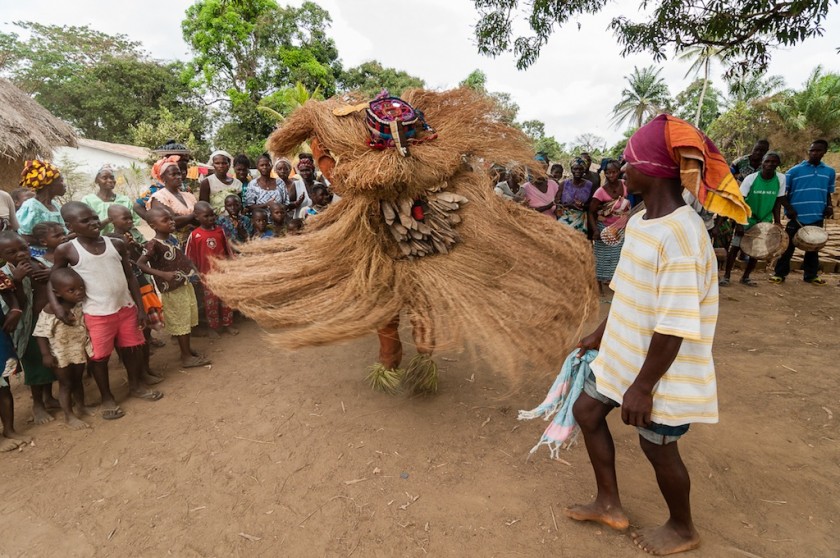
Three types of secret societies are practiced: Bondo, Poro, and Ojeh. Very few people, members and non-members, will discuss these secret societies as discussion may lead to death by members of the group. 

A Poro society ritual.

Friday, February 13, 2015

Pineapples Galore

World Hope International Sierra Leone has been working hard with the people of Rogbere. The original goal was to get 10 acres of pineapples planted in 2014. In Rogbere they are now at 2 acres of pineapple, with 24,427 pineapple suckers planted. They had hoped to be further along with this project but the Ebola virus crisis has meant WHI could not import pineapple suckers from Guinea (where the Ebola crisis started) and some farmers were reluctant to go to the fields and work near other people for fear of contracting the virus.

A Sierra Leonean planting pineapple suckers.
As it is now the dry season, it is too dry to plant any more. They hope to begin planting pineapples again in May. In the meantime, the plan is to care for the current acreage by working with the people of the village to weed, water, and start applying calcium carbonate, which will stimulate the pineapples to start fruiting. This should make them ready to harvest in the summer. Beyond selling the fruit in the open markets, WHI is coordinating the harvest with Africa Felix Juice near Freetown to buy some of the fruit for juicing.   

World Hope is also going to begin to look at supplementing some of the village farms with other fruits that are less labor intensive and are ready to harvest sooner than pineapple. They are going to focus on developing their nursery farm for guava and papaya to supplement these farms as soon as the plants are ready to be planted from the nursery.  This will help these villages diversify their crops as well, which will be very valuable long-term.

Tuesday, February 3, 2015

Ebola

Sierra Leone is facing significant challenges as a country. In addition to being one of the poorest countries in the world, they are also facing the worst Ebola outbreak in the history of West Africa. All of Sierra Leone has been affected, and even our small village of Rogbere.
Medical professionals in Sierra Leone attending to a quarantined man.
Earlier this year the village had a death due to Ebola because because a village resident had traveled to another village for a funeral. And more than that, the economic repercussions of Ebola are far-reaching and devastating. The average income in Sierra Leone, already among the lowest in the world, will be cut in half because of the crippling economic implications of Ebola. So what is  World Hope International, the organization we are working with for this village partnership, doing to help? This video explains some of what they are doing to fight Ebola.


Friday, December 19, 2014

Map of Rogbere

Here is the google maps view of Rogbere's approximate location.


Rogbere is located in the Western Area Rural District, of Sierra Leone, and is nine miles from the district headquarters and three miles off the Waterloo-Masaika Highway. Rogbere is a strategically located farm settlement, surrounded by ten villages in a three mile radius including: Faibaina, Magbagban, Masorie, Mafullah, Magbrofay, Maswaray, Makarifor, Gbonkor-Yalleh, Masifu, and Foya (the last appears on some maps.) Together with the surrounding villages, this village is blessed with an extensive piece of fertile, inland valley swamp. This swamp, which covers over 1,000 acres, is underutilized mainly due to the lack of needed farm tools and equipment such as tractors.

Formerly occupied by a Temne-speaking people and Fullahs, who raise cattle, Rogbere village is one example of the many others demolished during the Civil War (1991-2002). The village was burnt down in its entirety and the cattle were taken away. After the war, the displaced inhabitants resettled elsewhere.